Sunday, June 17, 2012

Falkland Reflections

Stanley Harbour
So 30 years after Liberation, what's happened to the Falkland Islands?

In my view the islanders have used the opportunity given to them and made a real difference to the islands.  Partially that opportunity came from financial help after the conflict but also from the judicious use of their natural resources, such as organising the commercial sale of fishing licenses.

As a result the islands are now self-sufficient apart from defence, and they'd like to pay for that too.  They have invested heavily in education, in health and in infrastructure.  In 1982 the only roads were in Stanley, now there are paved roads in Stanley and gravel roads in many parts of the islands.  Pre-82 education often finished at 15, now the offer is there for all young people to continue to degree level with government funding.  Large farms have been bought from absentee landlords and divided and sold to local farmers.  The islanders show immense gratitude and kindness to those in the armed forces who fought to liberate them in '82.

The islands have changed, there are more people living in Stanley than the countryside now.  Tourism has boomed as the pristine nature of the islands and its fantastic wildlife has been recognised, it is now the second largest source of income for the islands.  The internet, although it is expensive and slow, means that the islands are connected to the world - fancy dress costumes can be bought on ebay and posted via the twice weekly flight from Brize Norton.

There are challenges.  Argentina's sabre rattling unsettles people and takes up a lot of time in terms of communicating the islanders' views to the rest of the world.  If oil can be produced in commercial quantities, then there will be big decisions to make about how to spend the money.  Various sectors could grow but need the labour to do it, so the islanders need to decide if and how much they want the population to grow.

I hope that the Falkland Islanders make the right decisions about the future for themselves.  They have a strong and positive community, which they are justly proud of.  They live in a spectacularly beautiful place, which they cherish.  I feel very privileged to have been invited to share in their commemoration of the events of 1982 and their celebration of their freedom and I hope that they will be left in peace to continue with their lives as they choose.

Thursday, June 14, 2012

Liberation Day

Falkland Island Defence Force on parade
June 14th is liberation day. It is a public holiday on the islands with numerous events to celebrate.

The day dawned dry and cold, but the clouds promised rain.  We set off for the cathedral service at 10am, very well wrapped up.  The service was led by the Reverend Hines but included prayers led by the forces chaplain, the Catholic parish priest and a representative of the Tabernacle Free Church ; with readings from a school pupil, a veteran of 1982 and the Governor, so it was a service for all of the community.  The service was one of thanksgiving, remembrance and also looking forward to the future.
At the end of the service we then moved outside to walk down to the memorial ready for the service there.  The weather was awful, it started off as light snow and then turned into horizontal, in your face snow. However, no one was put off and the ceremony and parade took place with significant numbers of spectators and was broadcast live on the radio.  There were short prayers and then wreaths were laid – I was proud to lay one on behalf of Chichester College.  The services then paraded past, looking immaculate despite the conditions, whilst some of their comrades stood immobile at each corner of the monument. They didn’t twitch despite the fact that they were slowly freezing.  Once the parade had finished everyone got inside quickly.  There was a community event at lunchtime, with around 1,000 people attending, and which featured a 45 foot model of HMS Invincible made out of sponge cake, quite a sight!  Once the choir had sung, the Governor measured the cake and the food was finished, we slipped away, leaving some stalwarts still celebrating!

TheWild West

On Wednesday we visited the settlement at Fox Bay on West Falkland after the service at San Carlos.  We were travelling in three of FIGAS’ four Islander aircraft and even this short journey demonstrated the changeability of the weather here.  When we left San Carlos it was snowing but by the time we arrived at Fox Bay it was a bright, sunny day.


We visited the school at Fox Bay, which has a school population of two children, from two different families.  They are taught by Jim, who is a travelling teacher working with children in isolated areas.  He spends 2 weeks out of 6 with each family, which means 4 weeks at Fox Bay and then 2 weeks with another farming family in the north west of this island.  There are no roads to his other pupil’s home, so Jim’s driving skills and determination are tested in the winter, when travelling conditions are very difficult.  The normal routine is that rural children are taught by travelling teacher or in a settlement school but transfer to Stanley primary school at about 9 years old and live in the hostel there.  This isn’t always the case and I meant one teenager who had done all her secondary education by distance learning and had passed her GCSEs, a testament to her motivation.

The community at Fox Bay were very welcoming. They had organised a display of unseasonal sheep shearing and explained how they shear to ensure high wool quality and a good wool price.  The farms run very large sheep flocks, 7,000 sheep is not unusual and so the islanders have professional shearers, who can shear upwards of 350 sheep in one day. 

We then enjoyed a lavish lunch in the community’s social club, with spectacular views out over the bay. On a bright, still day it was absolutely beautiful and didn't live up to West Falklands' nickname of The Wild West!

Remembrance


One of the themes of this trip is remembrance for those involved in the Falklands war, both in the armed forces and the population.


Yesterday, we attended a short ceremony at the memorial for those killed on HMS Glamorgan.  The memorial is about two years old and is on the shoreline near Stanley.  HMS Glamorgan was hit by an Exocet missile whilst supporting 45 Commando in their attack on Two Sisters, near Stanley.  A mix of residents, veterans, forces personnel and visitors participated in the ceremony to remember all those affected.


Later in the day we visited an exhibition in the museum about the war.  There were lots of quotes from residents, including a letter from a child to her grandma telling her about the invasion.  She ended by saying words to the effect that - this is a sad letter, I’m sorry, but I needed to tell someone.  Other exhibits told of terrifying experiences, such as when residents were inside their houses, when fighting was taking place round them (the houses here are usually wooden and easily penetrated by bullets).  The exhibition vividly brought to life the hardships of the local population during the invasion and the war.  It was clearly something that none of us would want to happen to us.

Today, Wednesday, began with a short flight to San Carlos, where the British cemetery is and memorials list all of those who died during the conflict. It is a beautifully made cemetery maintained to a very high standard, as are all the memorials on the islands.  The service was attended by the Governor, the Foreign and Commonwealth Minister, as well as the President of SAMA and others who laid wreaths in remembrance.  It also seemed to be attended by quite a lot of media, so you may have seen it on TV before reading this.  It was a bitterly cold day, and the weather conditions and the difficulty of the terrain that we flew over made us think about the many adversities faced and endured during the campaign.   This service, like all those we have attended, was thoughtful and grateful and the islanders’ gratitude for their freedom was very clear.

Wildlife Paradise

First thing Tuesday morning we were taken by helicopter to see some of the Falklands famous wildlife.  The helicopter flight was only 10 minutes from Stanley to Volunteer Point, a journey that takes around 3 hours in the summer by car and considerably longer in the winter, depending on how often you get bogged down.  Locals develop excellent off road driving skills and can drive in places that most of us would struggle in.

At Volunteer Point we saw two types of penguin that live on the islands year round – Gentoo and King penguins.  It was an incredible experience.  


The landscape is spectacular and the penguins are relaxed about people, so you can walk very close to them and if you stand still they will come even closer to you!  Whilst we were looking at the King penguins, some of their adolescent chicks came so close they were almost standing on our feet.  During the winter they only visit their chick three times, so these chicks are hopeful that even people might have some food for them.  These colonies of penguins are healthy and in general wildlife on the Falklands is doing well.

The marine wildlife has become increasingly important to the islands, as they attract tourism, a growing sources of income.  Last year around 40,000 people visited, the majority for day visits from cruise ships.  For anyone interested in seeing animals in the wild, I think the Falklands is an incredible destination.

Wednesday, June 13, 2012

Saying thank you for freedom


Later on Monday we were invited to dinner by the 30th anniversary liberation committee where we met islanders and veterans. In the welcome speech the theme was that the islanders very much wanted to say thank you to those who gave them their freedom, to those who supported them afterwards, to all those who continue to support their right to choose their own future and to those who help them develop. They are also looking forward to those who work with them today on development - which is why the colleges were invited. Before 1982 few islanders stayed at school past 15 and levels of education were limited. After liberation education became a key focus and this investment in their young people is why so many come to study in the UK at 16.


When I first saw the guest list, I didn't understand the connection of all of the invitees. As people talk I begin to understand it more. Jersey and Guernsey have been invited because after the liberation in 1982 they gave the Falklands substantial financial gifts to help them rebuild. Jersey alone gave five million pounds. Both islands did this because of their experience of the trauma of occupation during the Second World War. Gibraltar share with the Falklands the fact that the population wish to remain British but another country wishes to claim them. The minister from Gibraltar replied to the opening speech at dinner and was passionate about freedom and democracy.


I think living in the UK, we take our freedom and our rights for granted. This week is making me think about it more and making me appreciate its value.

Remembering the 8th June 1982


We were met from the plane, at Mount Pleasant, by the organisers of the trip and made very welcome.  We drove towards Stanley but turned off after 15 minutes or so, towards Fitzroy, where there are monuments remembering those who died in the bombing of the Sir Galahad and Sir Tristram on the 8th June 1982.  As some of our party are from the Welsh Assembly, it was very important to them to visit Fitzroy and lay a wreath there in memory of the many Welsh Guards who died that day.

We were met at the monument by the Reverend Richard Hines and Tim and Jan Miller from Stanley who are very involved with supporting returning veterans.  There were also a number of visiting veterans from a range of the regiments involved in the conflict.  

The site of the Welsh Guards monument is on a small cliff overlooking an inlet, nearby are monuments to those from the RFA, the medical corp and engineers who also died that day.  As far as the eye can see is moorland – covered with snow, as it’s the middle of winter.  Various seabirds were about, skimming the water, splashing down and making a lot of noise in an otherwise silent landscape. There was a short, heartfelt service of remembrance.  Dusk was falling and we got back on the road to Stanley.

Tuesday, June 12, 2012

Flying down to Stanley


We assembled for the flight down to the islands on Sunday 10th June at RAF Brize Norton.  The flight was scheduled to leave at 23:59 but we were told that we had to check in at least 3 hours beforehand.  At least it gave us the chance to introduce ourselves and start to learn each others’ names.  From the start this trip has felt very different to other college trips, the VIP lounge at Brize Norton had 3 clocks on the wall, set for the UK, Kandahar and Kuwait.  Seeing those clocks was a simple reminder of the major areas that our armed forces are committed to and are continuing to work in while we get on with our day to day lives. The plane (a standard Boeing 767, with all mod cons) left on time for the first leg of the journey to Ascension Island (just 9 hours flying time!).  Ascension is just below the equator, some considerable distance off the West African coast.

At Ascension Island we were whisked off the plane and driven for about 20 minutes to the Administrator’s Residence. Apparently Ascension Island is called Cinder Island by those who are posted there.  It’s a volcanic island, red and barren with one Green Mountain where the Victorians managed to get plants and small trees to grow, creating a damper micro climate on that mountain.  It has a population of about 800 people, all living there because of work.  There is no resident population, even if a child is born there they do not have the right of residency.  The population seems to consist of the RAF, the US Air Force, the BBC who have a station that transmits into Africa, and Cable and Wireless who maintain their transatlantic cables.  Actually there is a resident population ­– thousands of green turtles and maybe on the way back we will see some. 
The Residence, a stoutly built Victorian single storey building, is high on Green Mountain with amazing views across the island and a hair raising drive up a single track road with very sharp hairpin bends.  Scraping noises as the back of the minibus ground on the road, only happened on half the bends!  We had time at the Residence to admire the views and have some welcome fresh fruit before we had to come back down to the plane for the second leg of the journey, another 8 hours to Mount Pleasant on the Falklands.

An unusual invitation

Some time ago Chichester College was invited by the Falkland Islands Government to send a representative to participate in the events organised for the 30th anniversary of the liberation of the islands from the Argentine invasion.  This invitation was in recognition of the work we do in educating their young people, post 16, and is linked to a theme of theirs this year, which is focusing on the future of the islands.  I was very privileged to be be asked by Shelagh, if I would come and represent the College on this important occasion.

From the information sent to us, it was clear that this anniversary is one where the islanders and those who fought, remember the war and the sacrifices made by all those involved.  It is also a moment for the islanders to show how their community has developed since the war and to show how they made the most of their freedom.  Also it is a time for the islanders to strengthen friendships, so that they can continue their way of life, despite continued Argentine claims that they should be part of Argentina.

The party includes a shadow cabinet junior minister; Lt Gen James Dutton, president of the South Atlantic Medal Association, who was in the Falklands war in 40 Commando; politicians from the Scottish Parliament, the Welsh Assembly and Jersey, Guernsey and Gibraltar.  Completing the party are the principal of Peter Symonds College in Winchester and myself for Chichester College.


Saturday, May 02, 2009

Yippee

Hurray a female poet laureate and one who can rhyme prayer with Finisterre!

To those, who are getting this post as an email please tell me if it annoys you and I'll take you off the list. I thought it might be a way of keeping in touch better, but it may just clog up your inboxes and irritate you - please say.

Sunday, March 04, 2007

Reading Groups

I've always thought that a reading group would be a fun thing to join, and now I've done it and I'm really happy to report that it is exactly what I hoped it would be.

The thing that had stopped me in the past was the lack of knowing anyone else who wanted to do the same thing. I used to mention in passing to friends that I'd like to join a reading group but no one ever said, "So do I, why don't we start one?" or "Do you, I know someone who's a member of one". Then one day I googled reading groups in Southampton and that took me to the library website and they run reading groups. I emailed into the ether and nothing happened and then months later, when I'd forgotten all about it, an email came saying the Library was setting up a new reading group and would I like to go.

Off I went on the agreed date, curious to see who else would be there. We are a fairly electic group, mostly female (do men not read?) but with a shared passion for reading. It has done all that I hoped for me. We've just read our third book, Helen Dunmore's "The Siege" and all 3 have been high quality novels. I haven't liked all of them but being part of the group has made me read all of them to the end and then I am surprised that in the group sessions I have lots to say, even about the books I'm not that keen on.

This book, "The Siege" is my favourite to date. It's historical, set in Leningrad during the German siege of the Second World War and it tells the story of the city through the experiences of a family. It's incredibly evocative and makes you feel what it must have been like (as much as anyone can by reading about something so awful). It also gives a feeling of what living under Stalin was like for Russians and how appalling that was. Despite the bleak setting of the story it is an easy book to read and ultimately uplifting in people's ability to survive the most appalling circumstances.

So we'll discuss it next week and it'll be something new. Can't wait.

Monday, July 31, 2006

Blackbird Success - so far so good

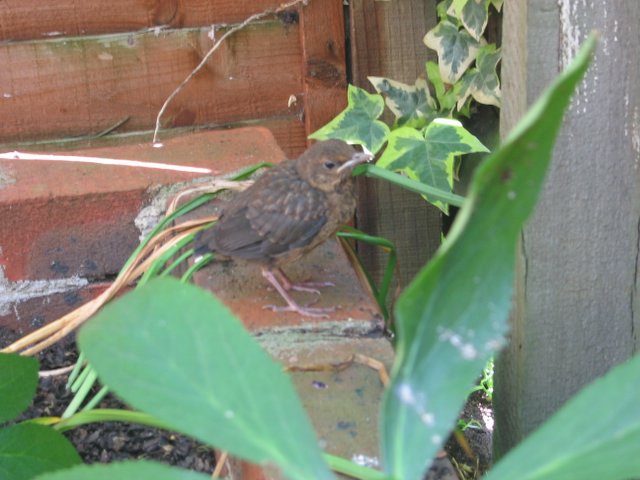
Posted by Picasa After watching the pair of blackbirds in my garden working a flat out shuttle system to feed their vocal brood, here's proof that they had some success. We've seen two youngsters out of the nest with the female.

The thing that really surprised me was that they come out of the nest when they're very vulnerable, they can flutter and hop but not fly. The youngsters then live mostly on the ground while they continue to develop while the mother continues to feed them.

When I first saw this one hopping about behind the shrubs in my garden I thought he'd left the nest too soon, but having read up on it a bit, it looks as if it's normal. Seems like a high risk strategy to me but luckily we don't have any cats living nearby.

This photo is at about 2 weeks out of the nest. We're still seeing them around a bit but I think they're nearly at the stage when they'll be on their own. It's been great fun watching them and I'll be a bit sad when they're gone!

Wednesday, July 12, 2006

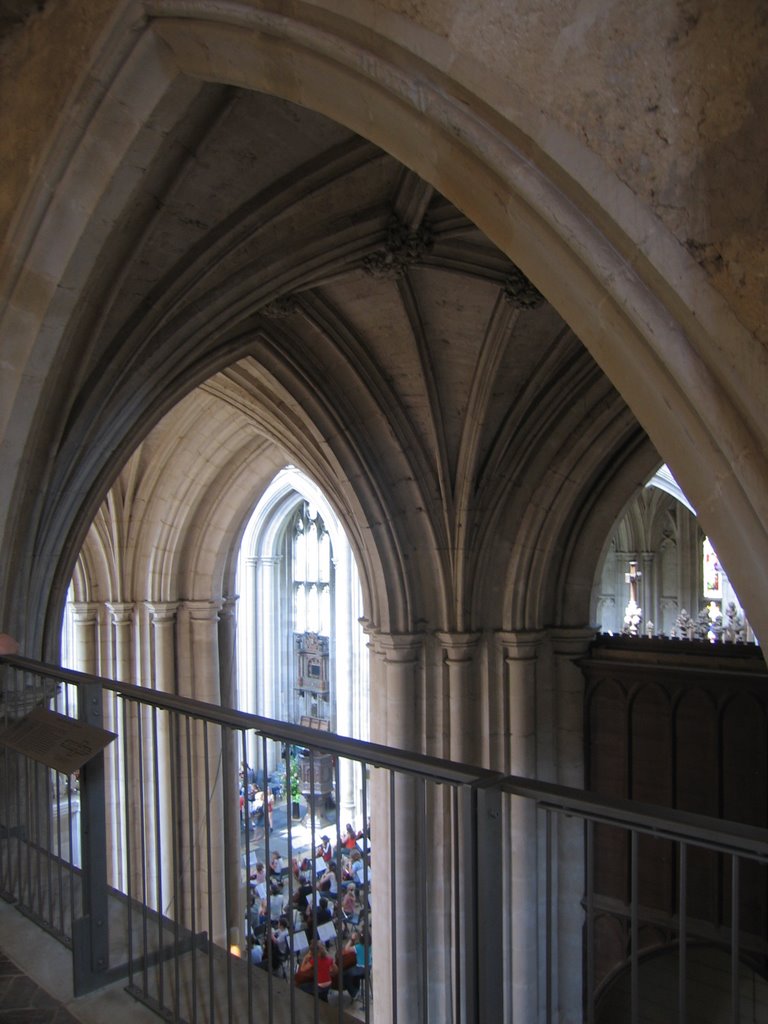
In praise of Winchester Cathedral


Winchester, original capital of England, depending of course on how you define England. Without doubt capital of Wessex, which during the Viking years became the dominant kingdom in surviving Anglo Saxon England.

Enough of Anglo Saxon political history. Why visit Winchester Cathedral? Not because it's the prettiest from the outside (it's not), not because it recently featured in the Da Vinci Code (although it did), rather because it is full of unexpected gems:

- Temporary scaffolding that is 500 years old. In the Triforium Gallery you get a fantastic view of the Norman structure of the cathedral. They meant to update it to the same style as the Nave but ran out of money, they'd put some wooden supports in, ready to lower the roof...it's still there 500 years later.

- The Winchester Bible, a gem of a medieval illuminated bible

- See Canute (the king who told the waves to go back) - he and several other Anglo Saxon kings and bishops are buried in finally decorated mortuary chests which are now poised on the walls surrounding the high altar. The oldest one dates to around 670 AD.

- The fantastic modern art that the cathedral continues to commission - a Graham Sutherland sculpture in the crypt, modern icons near the site of the shrine of St Swithin, the altar and candlesticks in the Angler's Chapel

The cathedral is a monument to English history and yet it lives and grows as well. Go and see for yourself.

Monday, June 19, 2006

Lima - redeeming its reputation slightly

Whenever you look at guidebooks or talk to people who've been in Peru for a quick visit, they tell you what a horrible city Lima is. I think they're being a bit unfair!

A lot of it stems from the fact, that if you arrive off an international flight, tired and jet lagged, the first thing you see as you leave the airport are some poor and ugly slums. At this point all the warnings about safety and theft reverberate in your head and you feel distinctly nervous.

You spend maybe a day in the city, being whisked round museums in a blur and closing your eyes and hoping you aren't going to die as the traffic rampages round at speed. If you've come to Peru with Inca ruins and mountain wildnernesses in your head, then Lima isn't going to appeal.

But even for the short stay tourist, there are nice things to do and pretty sights to see. In central historic Lima, efforts have been made to smarten things up and the central square is lovely, with the cathedral providing an electic range of religious art and tombs and San Francisco round the corner with an extensive collection of bones!

And if you have more time, walk down the shopping street between the Plaza de Armas and the Plaza San Martin and start to get a feel for daily life. It might be the city and it might be Lima, but it's all part of Peru and if you want to get to know the real country and not just the tourist hotspots it's a good way to start. Posted by Picasa

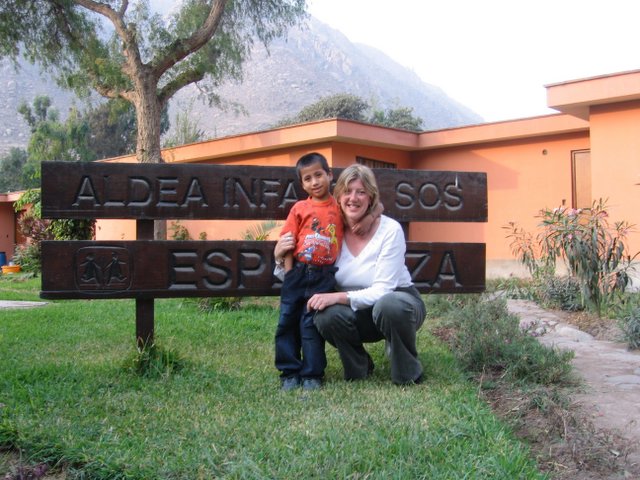
Brayan and I at Esperanza


Posted by Picasa

Sunday, June 04, 2006

Someone else´s election - Reflections on Peru

Today I´m coming home from Peru, as voting takes place in the second round of the Presidential election. It´s been very interesting to see the last two weeks in close up and through the eyes of the national press, rather than through the filter of other foreign observers.

I´ve been asked what do I think and I find it hard to answer, because I´m not a resident and so don´t have lots of background into what is going on but for what it´s worth here goes:

The choice of presidential candidates doesn´t seem a great one as it´s between Ollanta Humalla, who launched a failed coup a few years ago and Alan Garcia, who was president before and failed to do much good for the economy or to successfully tackle terrorist activity. What´s interesting is that watching television performances it´s obvious that the ability to come across as a strong leader by giving charismatic public speeches is really critical in Peru. I´m not sure that´s true anymore in the UK where the ability to manage the press seems more important than true charisma.

There´s been loads of outside commentary or interference. The Peruvian press loathes the interventions of Hugo Chavez and the existing government isn´t happy either. It seems incredible that Chavez, a canny individual, doesn´t seem to have grasped the fact that his continuing commentary is damaging Humalla´s electoral prospects. That or his real intention is continued worldwide pubilicity reinforcing external perceptions that he´s a key leader in South America and the damage it´s doing to Peruvian-Venezuelan relations is a price he´s prepared to pay. On reflection I´d bet on the latter.

By contrast the Chilean government acted decisively to stop Alberto Fuijimori (renegade Peruvian ex president) from talking to foreign press and interfering in the election. Less posturing more action.

From all the polls in the run up it seems that Alan Garcia is going to win handsomely, but whoever does I hope for the country´s sake that they get a president who isn´t corrupt and who works effectively to improve things for all the people in the country and narrows the wealth divide.

Saturday, June 03, 2006

Hope

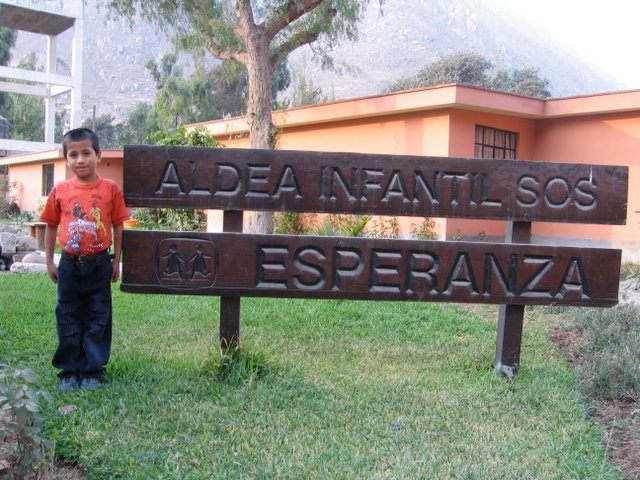
I´ve been in Peru for the last couple of weeks and one of the things I´ve done is visit Bryan, my "ahijada" (literally godson) but actually a child that I sponsor. Last year while I was living in Cusco I had quite a long conversation with a street child and one of the things I decided to do when I got home was to look for a charity that supported children.

Of course there are lots, but I decided to go through SOS Children´s Villages http://www.soschildrensvillages.org.uk/ as they focus specifially on abandoned or orphaned children and as it was a street child who´d triggered my interest, it seemed the right thing to do. I felt a bit odd about the visit in advance, no real expectations of what it would be like, but also a bit apprehensive as I´m not a parent and so don´t have huge exposure to children all the time. I also felt concerned that I'd feel patronising rather than helpful, be shown round like some honoured guest.

The charity in Peru were incredibly accomodating, when I asked how to get to the village, they said don´t worry about it, just come to the office and we´ll take you. So off we went, Jacqueline from the charity, Fernando my boyfriend and I. We´d established that I spoke Spanish which slightly rebounded on me, because Jacqui talked at high speed and it was quite a test for my understanding.

While I was concentrating on listening, Fernando was asking appropriate questions, like where do the children come from? Jacqui said that they work closely with social workers who refer children who are orphaned, abandoned or at risk. They also get sad sad cases such as children literally threwn away and found with rubbish. I got the feeling that in a poor country like Peru, SOS and other charities like it, are providing the social safety net that the state provides in developed countries. Of course the demand is sadly more than the charities can meet at the moment. SOS is continuing to open new villages in Peru as communities ask for them but it can only do so as its funds permit.

We wound our way up a river valley to Choisica, a pretty town that is about an hour out of Lima. There are two SOS villages there, Rio Hondo and Esperanza, where my child lives. We got to the gates of the village and went in. Jacqui was at pains to explain that the village is being seriously renovated so there´s loads of building going on and not all the houses are currently occupied. However, to me it looked very nice and a calm environment as well. The houses are one storey and painted white with lots of greenery around and flowers.

The SOS approach is to place the children within villages, communities of several houses, each with a mother who is totally responsible for her own house and children. As a mother will have many children, she has the help of aunts, often mothers in training. If there are suitable schools nearby the children attend these, if not the community might have its own school.

We walked through the community to the house where Bryan (my ahijada) lives. Tania, the house mother came and welcomed us with Bryan. The others (there are 11 in the house in total) were all doing their homework and were all looking over very curiously. Bryan is 7 and he has lived in the village for several years, his older brother Franco is also there and his younger sister. One of the things I like about SOS is that they don´t split families up and the children grow up together.

Being Peruvian he is tiny and slight, to my surprise as we watched him and Tania come to the door I felt quite emotional. He kissed Jacqui and I hello and very formally shook Fernando´s hand. Then I gave him a bag with some gifts. He took each one out very carefully, looking at it attentively before moving on to the next thing. The football at the bottom of the bag got a huge grin and it got carried around a lot.

I´d brought a photo album with pictures of my family and the area round Southampton.
He was fascinated by the photographs of the liners and when he looked at the dinghy photos, he wanted to know if the sailors were going to drown!! A photo of breakfast was also of lots of interest because you could see into one of the bowls and he wanted to know what it was. The answer was cereal and milk but I´m not sure I really explained it.

He very proudly showed me round the house, including his bedroom, which he shares with 3 other boys, and the bedroom his little sister sleeps in. It was all incredibly tidy and each child has a small selection of toys and their own space to keep things in. Then we all walked round the village with Bryan pointing out the hens and dogs and took photos of all of us. When we got back to the house he got his homework books out to show me. He took us through every page of them - writing practice and maths as well. He seems to be doing well and the books were beautifully tidy and cared for. Then too soon, it was time to go. Bryan and his mother walked us to the gate and waved goodbye as we drove away.

So after my visit how do I feel? I didn't feel awkward during my visit, I really enjoyed meeting everyone and Jacqui told me that very few sponsors do visit so the children are really curious to meet them. I was committed to sponsoring a child for the long term before I visited (SOS support them through school and then help them settle into the adult world through a slow transition process). However, meeting Bryan in person has made it very real for me and I hope that he enjoyed meeting me.

Monday, May 15, 2006

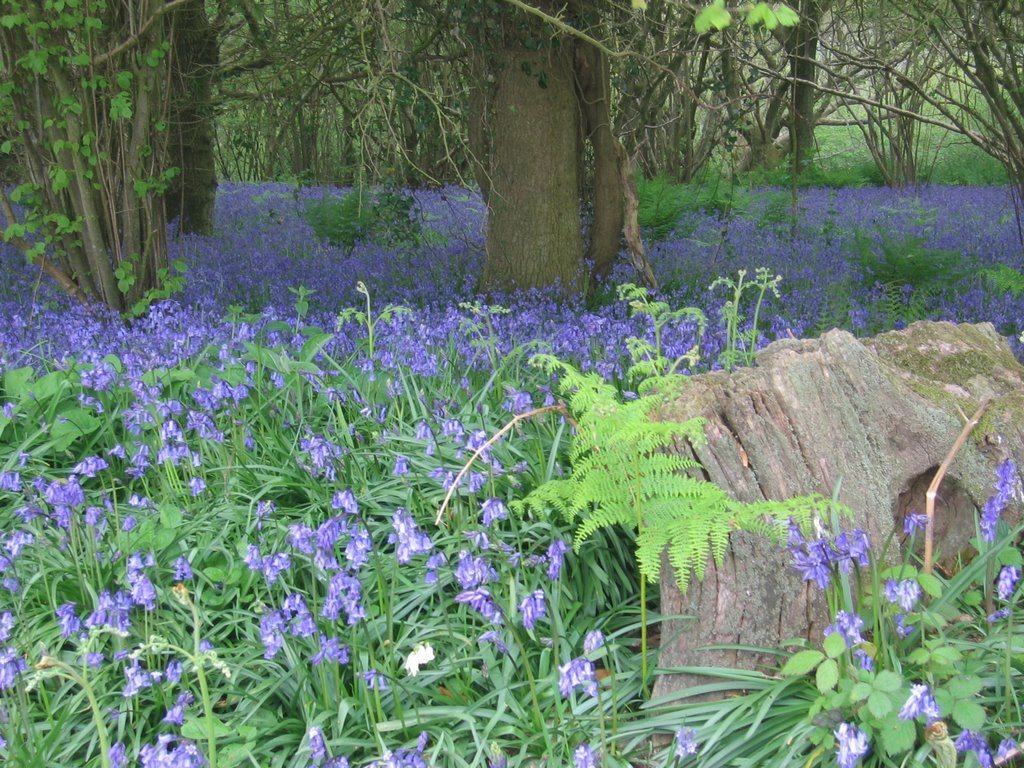
Quintessentially English

A bluebell wood in full bloom this weekend on the Isle of Wight.

And of course a blackbird update, they're definately nesting in the clematis. The female is egg sitting and the male hangs about and defends his territory. He gets most upset with any pigeons who come into the garden looking for food and squares up to them, fluffing up his feathers to look big and aggressive. He doesn't seem to have realised that being a third of the size of most of the pigeons, they don't care!

Monday, May 08, 2006

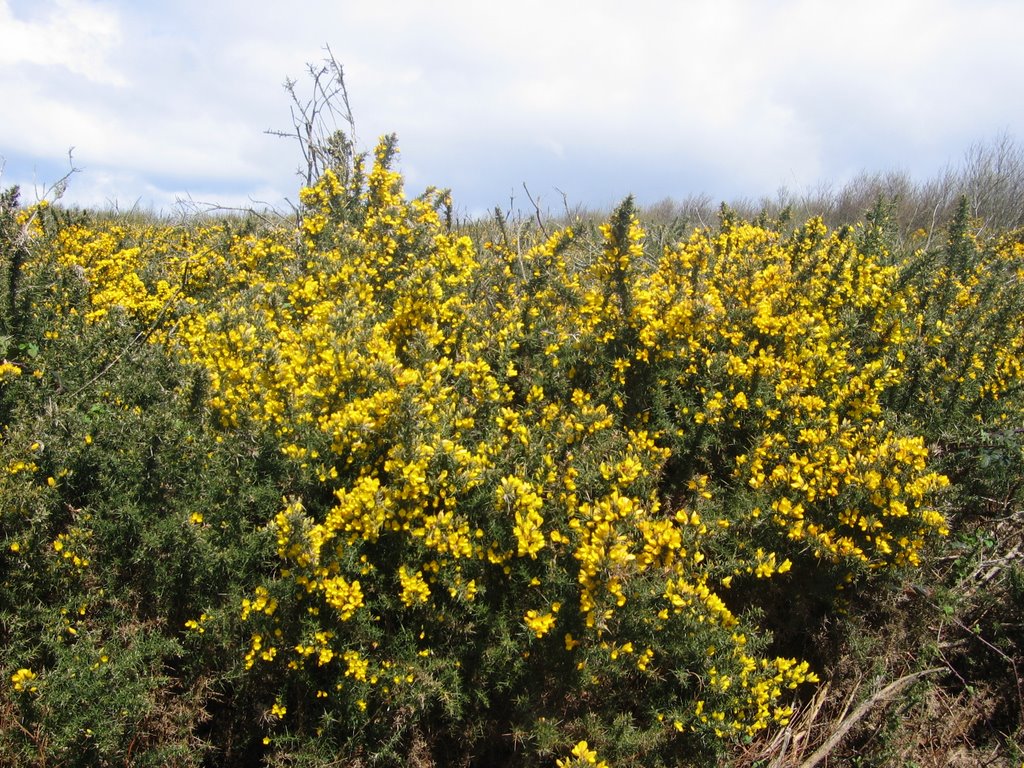
Island in bloom


May hedges on the Isle of Wight and gorse bushes across the Downs.


Friday, May 05, 2006

A Blackbird Ramble

So Spring is really here, it really is.....and just to prove it my local blackbirds are building a nest in my Clematis. I know that blackbirds are very common and in no way endangered but I like them being around, they often hang around when I'm in the garden and they sing beautifully. (I think I notice bird song more since my time in the rain forest last year. The sad thing is that I have no idea what I'm listening to, apart from blackbirds!! In fact I could probably still identify more rainforest birds than English ones on their songs....)

I am really pleased that the blackbirds are having another go at nest building in my garden because last year they had a bit of a disaster. At the same time last year they decided to build a nest in my rambling rose, it always looked like a high risk strategy because the rose was trying its best to rip the trellis off the fence and so it wasn't a very secure place to build. However, they built, they laid an egg, the female sat on it for a week or so and then one day there was a lot of wind, the rose waved about a lot, the branches moved and the nest slipped, end of egg!

I had enjoyed watching them so much that I decided to help out this year, so I bought a blackbird friendly nest box and put it up. Of course they have ignored the sturdy safe option of the nest box but I'm delighted that they've built again and fingers crossed this time I'll get to watch fledglings learn to fly.